Ngātoro-i-rangi continued on his travels and crossing the desert met a man called Hapekituarangi. He said to the latter, "What brings you to this cold and barren country where there is nothing to eat?" Hapekituarangi looked towards the ranges and said, "My breath is my food". So the mountains were called the Kaimanawas: 'Kai' meaning food and 'Manawa' meaning breath.
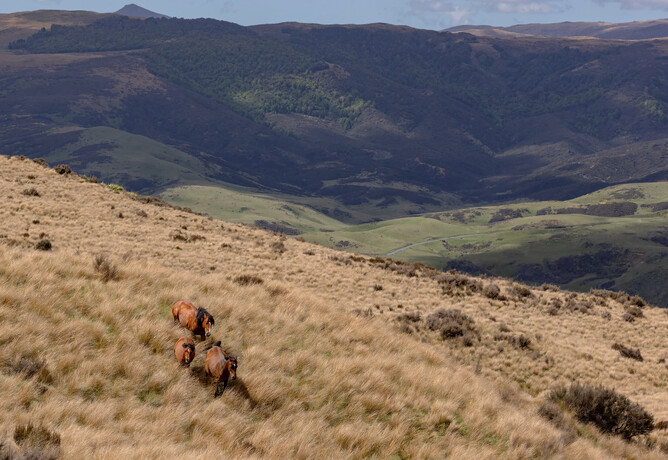
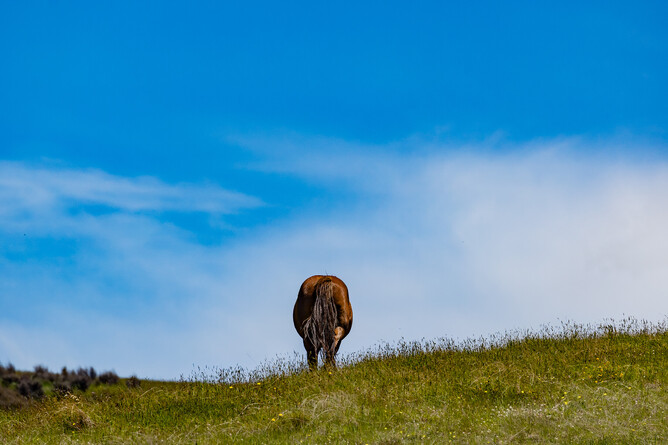
Kaimanawa horses are the wild herds that roam the Kaimanawa Ranges in the Central Plateau of the North Island. The first wild horses were recorded in the Ranges in 1876. There is a history of Welsh and Exmoor ponies being cross bred with domestic horses from sheep runs in the area and in 1941 horses from the mounted rifle cavalry units at Waiouru were released. These breeds have combined over the last 150 years to produce the distinctive and recognised breed - the Kaimanawa.
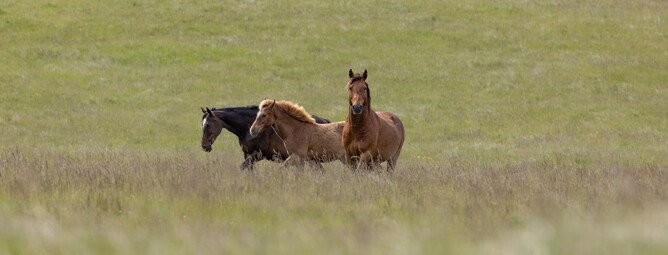
During the First World War, 10,000 horses left New Zealand, including many Kaimanawas, that never returned. This partnership, between horse and military, was the start of a special bond.
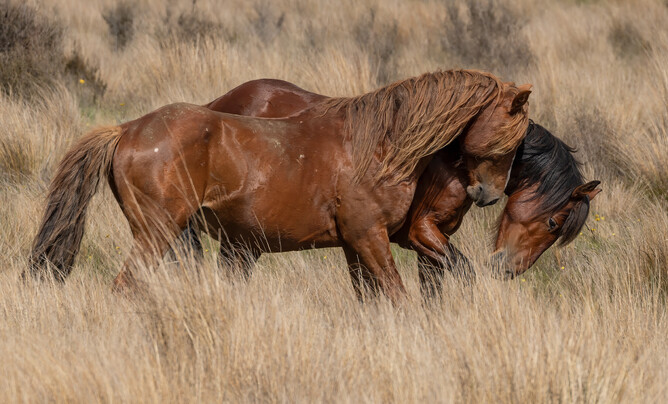
In 1997, the horses in the Kaimanawa Ranges had increased to nearly 2,000 and they were also in the northern region of the Ranges which needed to be a protected area for rare native plants. An adivsary group was set up to manage and look after the horses' future. At present, the Department of Conservation (DOC) allows a population of 300 horses to remain in the wild. Each year a census is undertaken by DOC and excess horse bands are removed annually from selected areas during the muster.
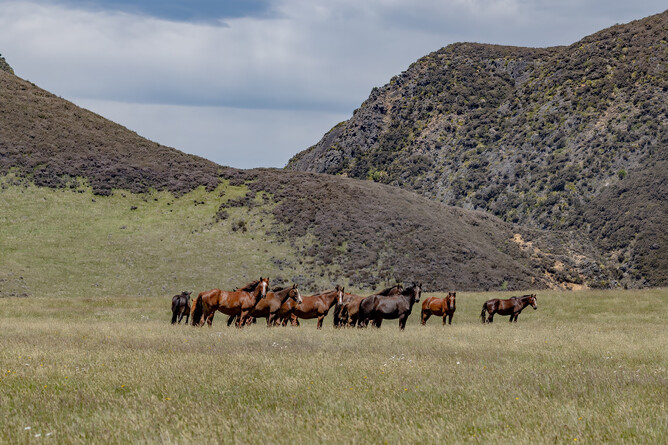
Kaimanawa Hertiage Horses (KHH) is a not-for-profit organisation run by a passionate group of volunteers dedicated to the care and welfare of the Kaimanawa Horses in both domestic and wild environments. Since 2003, KHH has re-homed over 1,237 horses. Annually, they offer a trip into the ranges to see the horses in the wild and I had the opportunity to go on one of those trips in December 2025.
You can see the entire set of images from my trip here.